
A trail hike asks more of your dog than an everyday walk. Longer distances, rougher terrain, changing weather, and fewer easy ways back to the car mean both you and your adventure buddy need a little extra preparation before setting out.
The goal isn’t to pack for every possible scenario. It’s to understand the trail, bring the essentials, pay attention to your dog along the way, and have a plan if the day doesn’t go exactly as expected. Before you grab the leash and hit the trail, here’s how to prepare for a better hiking day together.
1. Choose a Dog-Friendly Trail
A successful hike starts before you reach the trailhead. Research your destination to make sure dogs are permitted and check the specific rules for the trail you plan to hike. Some parks welcome dogs but require them to remain leashed or restrict them from certain trails and protected areas. Don’t choose a route based on mileage alone. Elevation gain, trail surface, shade, water access, and weather conditions can make two hikes of the same distance feel completely different.
Most importantly, choose a trail that matches your dog’s age, fitness level, and hiking experience. A young, active dog accustomed to the trail may be comfortable with a longer route, while a puppy, senior dog, or first-time hiker may be better suited to a shorter, easier adventure. When in doubt, start small and build up gradually.
2. Check the Weather Before You Go
Weather can change the trail experience quickly. Check the forecast before leaving home and consider not only the temperature at the trailhead, but how conditions could change over the course of your hike.
On warmer days, exposed sections of trail can become uncomfortable, while cooler weather can bring wind, rain, or rapidly dropping temperatures. Adjust your route, departure time, and gear accordingly. If the forecast doesn’t look right for your dog, save the trail for another day. There will always be another adventure.
3. Pack Water, Snacks, and Trail Essentials
Even in cooler weather, hiking can be physically demanding. Bring enough fresh water for both you and your dog rather than relying on streams, ponds, or other natural water sources along the route. Offer your dog water regularly, especially after steep climbs or longer stretches of activity. For longer hikes, bring some of your dog’s usual food or familiar treats for a little extra energy during a rest break.
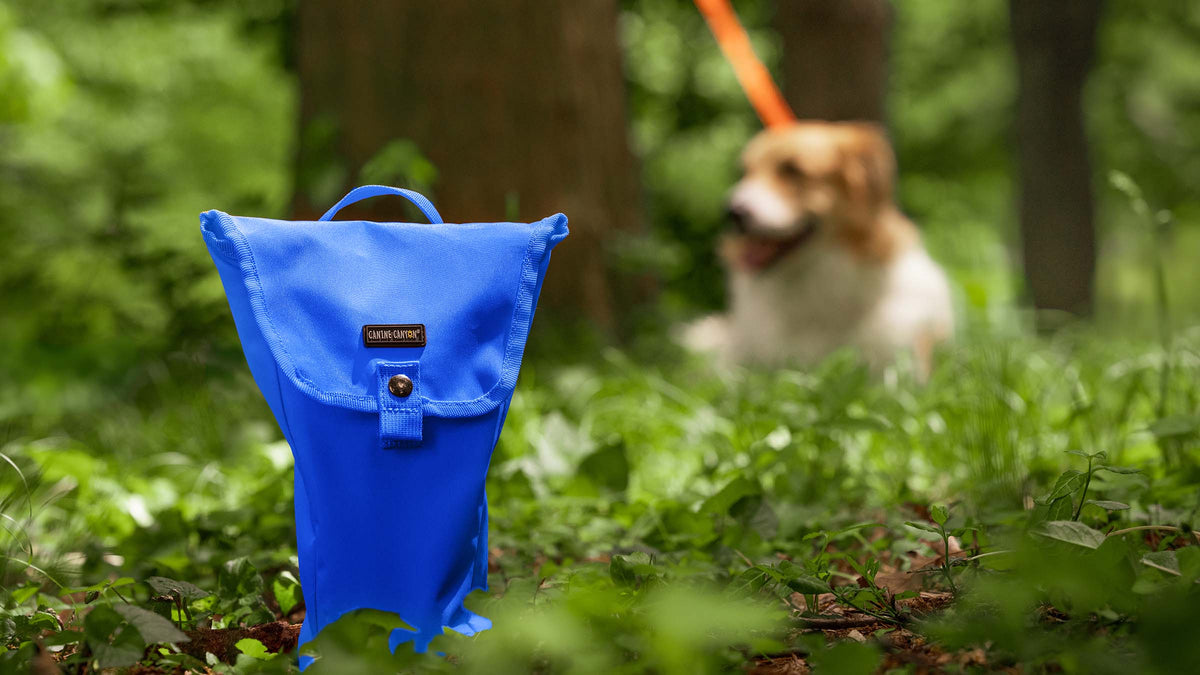
Keep other frequently used essentials within easy reach, including waste bags, leash accessories, and basic first-aid supplies. The Canine Canyon Bailey Dog Waste Bag Dispenser can attach to your leash or other gear, keeping a standard roll of waste bags accessible without taking up space inside your hiking pack. Its lightweight ripstop construction makes it an easy addition to your trail setup. Cleaning up after your dog matters just as much in the backcountry as it does around the neighborhood. Follow Leave No Trace principles by packing out pet waste, food packaging, and anything else you bring onto the trail.
4. Protect Your Dog’s Paws
Your hiking shoes provide protection from rocks, roots, and rough terrain. Your dog’s paws encounter those surfaces directly. Check trail conditions ahead of time and pay attention to the ground as you hike. Sharp rocks, loose gravel, debris, and hot surfaces can all cause discomfort or injury. When temperatures rise, be especially cautious on exposed surfaces and choose shaded sections whenever possible.
Rest breaks are also a good opportunity to inspect your dog’s paws. Look for cuts, irritation, or small rocks and debris caught between the pads. If your dog suddenly begins limping or repeatedly licking a paw, stop and check before continuing.
5. Let Your Dog Set the Pace
Your planned mileage should never be more important than how your dog is doing. Build regular rest breaks into your hike rather than waiting until your dog is exhausted. Dogs may continue following their owners even as they begin to tire, so watch for changes in behavior such as slowing down, repeatedly stopping, seeking shade, excessive panting, or becoming less enthusiastic about moving forward.
Adjust your pace and distance based on what you see. A dog that comfortably hikes several miles on a cool, familiar trail may struggle sooner on a steep or unfamiliar route.Turning around early doesn’t mean the hike was unsuccessful. It means you paid attention to your adventure buddy.
6. Have a Backup Plan for Tired Legs
Before heading onto a longer or more remote trail, ask yourself one important question: What will I do if my dog can’t walk back to the trailhead?
For smaller dogs who may not have the stamina for an entire route, the Canine Canyon Gio Airline Approved Dog Backpack Carrier provides a hands-free way to give tired legs a break. Padded shoulder straps help make carrying more comfortable, while breathable mesh windows provide airflow for your dog. For small adventure buddies, having a carrier available can also make it easier to adjust an outing to their abilities rather than expecting them to complete every mile on foot.
But fatigue isn’t the only reason a dog may need assistance. A sore paw, minor injury, or unexpected physical problem can make the return trip much more difficult. The Canine Canyon Rover Rescue Dog Carry Support Harness is designed for situations when your dog needs help getting back from an adventure. Made with padded, breathable air mesh, the harness provides a way to support or carry a tired or injured dog over rugged terrain and can be worn on the front or back. Designed for dogs up to 70 pounds, it can be a particularly useful addition to your gear when you’re heading farther from the trailhead.
Hopefully, you’ll never need your backup plan. But knowing how you would get your dog back safely can give you one less thing to figure out in the moment.
Better Hikes Start With Better Preparation
Hiking with your dog isn’t about covering the most miles or reaching the trailhead with the most gear. It’s about choosing an adventure that works for both of you and being prepared to adjust along the way.
Research the route and weather before leaving, bring plenty of fresh water, keep cleanup essentials accessible, and pay attention to your dog’s paws, pace, and energy level. Most importantly, have a backup plan in case your adventure buddy needs help getting home.
With a little preparation and a willingness to let your dog’s abilities guide the day, you can spend less time worrying about what might happen and more time enjoying the trail together, from the first step to the last.
Share:
Flying Fido: 6 Stress-Free Tips for Early Autumn Air Travel With Small Dogs
What to Bring on a Walk in the Park With Your Dog