
Cooler destinations, fewer summer crowds, and one last getaway before the holiday rush can make early autumn a great time to travel. And if your adventure buddy is small enough to meet your airline’s in-cabin pet requirements, they may not have to stay home.
But flying with a small dog takes more preparation than simply adding another passenger to the itinerary. Pet policies vary by airline, carriers need to meet specific requirements, airport security works differently when you have a dog in tow, and even a short flight can involve hours away from your usual routine.
The key is to prepare for the journey in the same order you’ll experience it: booking, carrier prep, packing, airport security, and boarding. Here are five small dog air travel tips to help make your early fall getaway easier from takeoff to touchdown.
1. Before You Book: Make Sure Flying Works for Your Dog and Your Airline
Before booking, consider whether flying is the right choice for your dog. Air travel can mean unfamiliar people, busy terminals, new environments, and changes to their normal routine, so think about how comfortable your dog is likely to be with the experience. If you have concerns about flying based on their health, age, breed, or personality, talk with your veterinarian before committing to the trip. Once you’re confident your adventure buddy is ready to go, make sure they can come along before locking yourself into a nonrefundable fare.
Start directly with your airline’s current pet policy. Many airlines allow small dogs to travel in the cabin when they remain in an approved carrier that fits beneath the seat, but individual rules vary. Airlines may also limit how many pets can travel on a particular flight, making advance reservations important.
Before booking, review the airline’s current pet policies, including reservation availability and fees, carrier dimensions and size or weight limits, and any required health or vaccination documentation. Be sure to check for age, breed, route, or aircraft-specific restrictions, as well as additional entry requirements for international travel. International travel requires another layer of planning. Destination countries establish their own requirements for issues such as vaccinations, health testing, documentation, and other entry conditions, while airlines may impose additional rules of their own.
2. Get the Right Carrier and Practice Before Flight Day
Your dog’s carrier may be luggage to you, but to your pup, it will be their personal space through much of the airport and flight. That makes carrier preparation one of the most important parts of traveling with a small dog on a plane.
Start by checking your airline’s website for its current carrier requirements. Don’t assume that a carrier labeled “airline approved” will work for every flight: maximum dimensions, under-seat space, and other requirements can vary by airline and aircraft. Compare your carrier’s measurements with the rules for your specific trip, and add an identification tag with your pet’s name and your contact information. It’s also a good idea to keep a current photo of your dog with you while traveling in case you become separated.
Bring the carrier out well before your departure date and leave it open somewhere familiar at home. Let your dog investigate it without immediately closing them inside. Adding treats or familiar items can help create a positive association with the space. Gradually work toward short periods inside before extending the amount of time your dog spends there. The goal is simple: by travel day, going into the carrier shouldn’t be a brand-new experience.
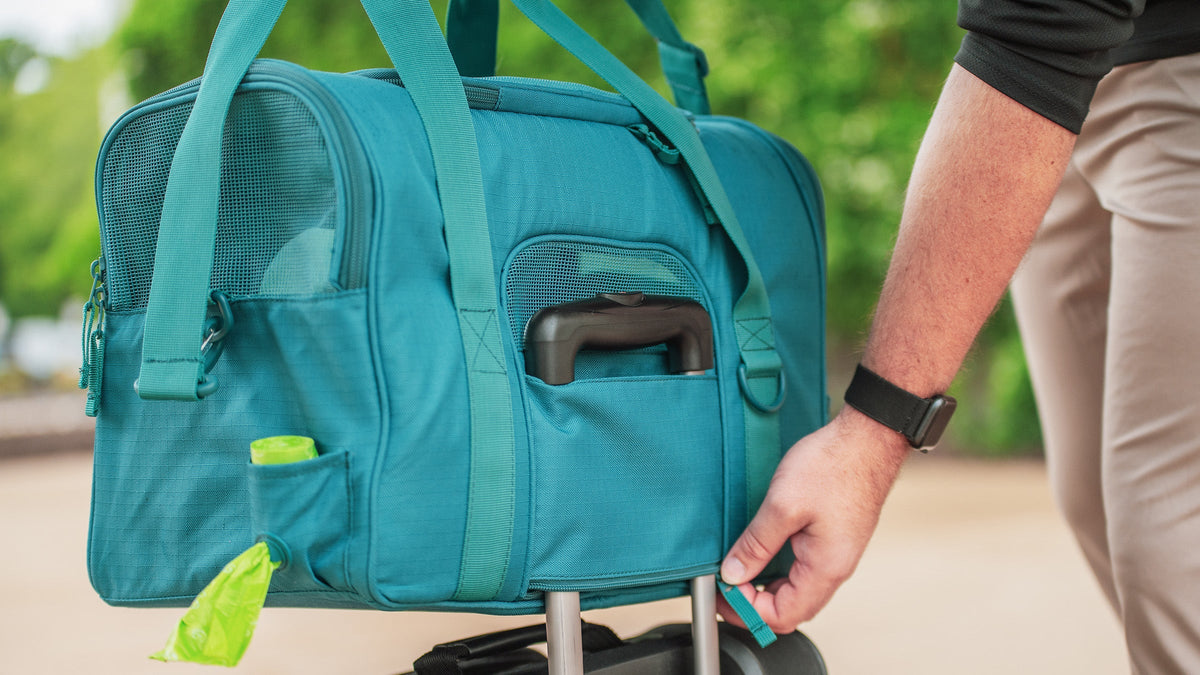
Choosing the right carrier also depends on how you expect to travel once you leave the plane. The Bella Airline Approved Dog Duffel Carrier offers a traditional carrier format for small adventure buddies traveling through terminals and between destinations. If your itinerary continues beyond the airport and you prefer a hands-free carrying option, the Gio Airline Approved Dog Backpack Carrier can make it easier to move through different parts of the trip. Whichever format works for you and your dog, check its dimensions against your airline’s current rules before departure and make sure it provides an appropriate fit for your pup.
3. Pack a Pup-Sized Carry-On
Once your suitcase disappears at the checked-baggage counter, it can’t help you when your dog needs something at the gate. Think of your dog’s travel supplies as a small carry-on of their own. The essentials you might need before, during, and immediately after the flight should stay accessible rather than buried in checked luggage.
Your small-dog flight checklist might include a leash and harness, waste bags, a small amount of food or treats, necessary medications, a recent health certificate, required travel documents, pet-safe wipes, and current identification information. Don’t forget comfort items like a dog bed and toys. Keep essential food, water supplies, medications, health records and cleanup items with you.
Hydration deserves its own spot on the list. The Rufus Collapsible Wallet Travel Bowl packs down when you don’t need it and gives you an easy way to offer fresh water during the airport portion of the trip and again after arrival. Check current TSA requirements for any liquids you plan to take through security, then refill your own water supply once you’re through the checkpoint if needed.
Packing light doesn’t mean packing unprepared. It means making sure the things most likely to solve a problem are the easiest things to reach. And because this is an early autumn trip, think beyond the weather at home.
A warm departure city can lead to a chilly destination several hours later. Check conditions at both ends of the flight and pack for what your dog will encounter after landing. Depending on your destination and your individual dog, that could mean keeping a lightweight layer, small towel, or other weather-appropriate item accessible rather than inside a checked suitcase.
4. Know What Happens at Security Before You Get There
Airport security can create uncertainty for first-time pet travelers, especially if you assume your dog will simply stay inside the carrier. For dogs traveling in the cabin in the U.S., expect to remove your dog from the carrier during TSA screening so the empty carrier can be screened separately.
That makes another piece of pre-trip practice particularly valuable: getting your dog calmly in and out of the carrier. At home, rehearse attaching the leash or harness securely, opening the carrier, bringing your dog out, holding or walking with them as appropriate, and returning them to the carrier. You’re not recreating the airport, you’re simply making the motions themselves familiar.
On travel day, give yourself extra time. Airports combine crowds, announcements, rolling suitcases, unfamiliar smells, and other distractions that your dog doesn’t encounter during a normal day. Rushing through that environment adds pressure neither of you needs.
It also helps to research the airport before leaving home. Find out where its pet-relief areas are located, including whether there is an appropriate option after security. Many airports provide designated pet-relief spaces, and knowing where you’re headed can save you from searching the terminal when your dog needs a break.
Keep your leash and other frequently used supplies easy to reach as you move through the airport. Your beautifully organized packing system won’t feel very organized if the one thing you need is underneath everything else.
5. Give Them a Reset Before Boarding
Getting through security isn’t the end of the pre-flight routine. Once you’re on the secure side of the airport, use the remaining time to help your dog reset before boarding.
If appropriate, visit the airport’s pet-relief area rather than waiting until the last possible minute. Offer your dog some fresh water from the Rufus Collapsible Wallet Travel Bowl, then give them a little time to settle back into their carrier.
Keep your dog’s feeding schedule as close to their normal routine as possible, but avoid a large meal right before the flight. A light meal several hours before takeoff may help reduce the chance of an upset stomach while traveling. If time and airport access allow, give your dog a walk or some gentle activity before boarding so they can stretch, use the bathroom, and burn off some energy before settling into their carrier.
This is also a good time for a final check. Keep the leash, required documents, and arrival essentials within easy reach, and make sure your dog is comfortable before heading to the gate. Try to keep this final stretch calm rather than filling it with unnecessary activity. For many in-cabin pets, boarding means settling into their carrier beneath the seat and remaining there for the flight, depending on the airline’s rules.
Small Dog Air Travel Is Easier When the Unfamiliar Becomes Familiar
The hardest parts of flying with a small dog often aren’t the miles in the air. They’re the moments surrounding the flight that you haven’t experienced together before.
Knowing what to expect before travel day can make the airport much easier to navigate. Confirm that your dog is eligible to fly, make sure the carrier meets the airline’s requirements, pack the essentials you’ll need along the way, and familiarize yourself with the security process and pet-relief options before you arrive. Confirm the airline rules before booking. Introduce the carrier early. Keep a pup-sized collection of essentials within reach. Practice the security routine. And build in one last reset before boarding.
With the right preparation and travel gear that can move easily from home to terminal to destination, your small adventure buddy can be ready for one more getaway before autumn gives way to the holiday season.
Share:
Fall Camping With Your Dog: Plan the Perfect Weekend for You and Your Adventure Buddy
Hiking With Your Dog: Essential Gear and Tips for a Better Day on the Trail